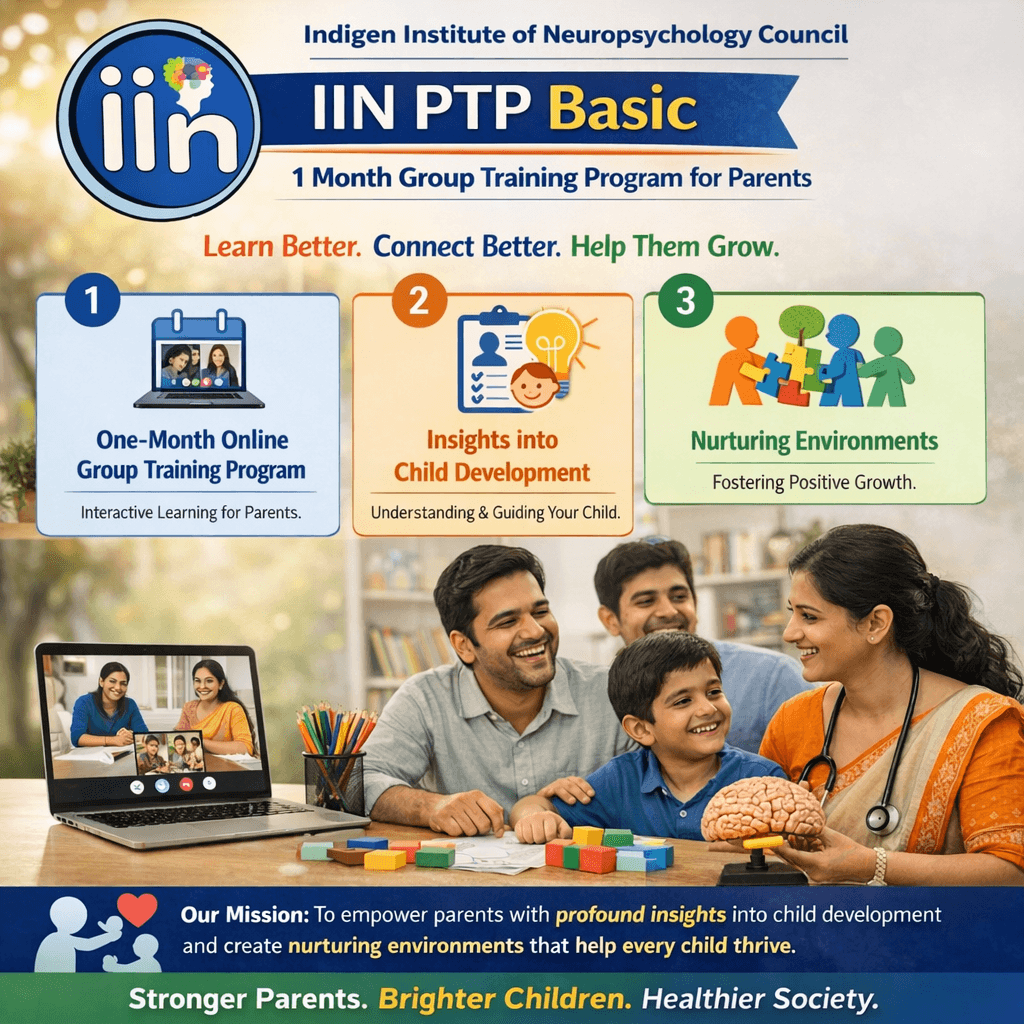
Description
Curriculum
FAQs
Instructor
Reviews
- 6 Sections
- 6 Lessons
- 10 Weeks
Expand all sectionsCollapse all sections
- Module 1: Attention and orientationFocus is on increasing the child’s noticing of the caregiver. Attention is treated as the entry condition for interaction. The caregiver reduces repeated calling and instead uses presence, positioning, and simple actions to become more observable and relevant within the child’s environment. This increases the likelihood of visual orientation and initial connection.1
- Module 2: EngagementFocus is on sustaining shared interaction once attention is established. The caregiver joins the child’s ongoing activity rather than redirecting it, maintaining proximity and continuity. This supports the development of shared attention and increases the duration of interaction, which is necessary for learning through repetition.1
- Module 3: Spontaneous initiationFocus is on reducing prompt dependency and increasing child-led behaviour. The caregiver limits instructions and avoids repeated cues, creating space for the child to initiate action or interaction. This supports autonomy and improves the likelihood of generalised behaviour across contexts.1
- Module 4: Communication emergenceFocus is on communication as an outcome of interaction rather than direct teaching. Through shared attention and coordinated participation, the caregiver responds consistently to the child’s signals, whether nonverbal or verbal. This strengthens the link between intention and expression, allowing communication to develop gradually1
- Module 5: Behaviour through interactionFocus is on understanding behaviour within the interactional context. Behaviour is viewed as influenced by the quality of engagement and responsiveness. The caregiver modifies responses to reduce escalation, increase predictability, and support adaptive patterns, thereby improving regulation within interaction.1
- Module 6: Relationship consolidationFocus is on stabilising interaction patterns across daily routines. Consistent caregiver behaviour supports sustained synchrony, engagement, and communication. The emphasis is on maintaining continuity across settings so that interaction becomes a stable and reliable context for development.1
The program duration is 6 weeks (weekly session, 90 minutes each)
You can easily participate in our program as it is conducted online. Regardless of your location, you can join us through the Zoom platform. Connect with our experts and other parents who face similar challenges on a daily basis. Our program offers a range of resources and tools, including expert advice and support groups, to assist you in navigating parenting challenges. You will learn practical strategies to manage common issues such as behavior problems and communication difficulties. Our community of parents and professionals is committed to supporting you at every step, empowering you to raise your child with confidence.
No, prior experience or qualifications are required to enroll in the program. It is designed to be accessible to parents of toddlers seeking effective strategies to support their child's development.
Online parents training programs offer several advantages, including accessibility, cost-effectiveness, flexibility, personalization, and support. You can access the program from anywhere, at any time, making it convenient for busy parents. The self-paced structure allows flexibility in learning, while the program can be customized to address your family's specific needs. Additionally, you'll have access to support resources such as forums and chat rooms, creating a supportive community.
By applying the techniques learned in the program, you will create a safe and engaging environment for your child to express themselves, learn social skills, and regulate their emotions. This can lead to significant improvements in their behavior, communication, and emotional well-being.